Implied probability calculator
Quoted odds are probabilities in disguise. Enter the odds for every outcome of an event to see the probability each one implies, why the implied probabilities add up to more than 100%, and the probabilities you get once that excess is removed.
| Outcome | Odds | Implied probability | No-vig probability | Fair odds |
|---|---|---|---|---|
| Home | 2.10 | 47.62% | 45.43% | 2.201 |
| Draw | 3.40 | 29.41% | 28.06% | 3.563 |
| Away | 3.60 | 27.78% | 26.50% | 3.773 |
| Total | 104.81% | 100.00% |
Show the working, step by step
Turn each price into the probability it implies.
implied = 1 ÷ decimal odds Home: 2.10 → 0.47619 Draw: 3.40 → 0.294118 Away: 3.60 → 0.277778
Add them up. A fair market would total exactly 1; the excess is the overround.
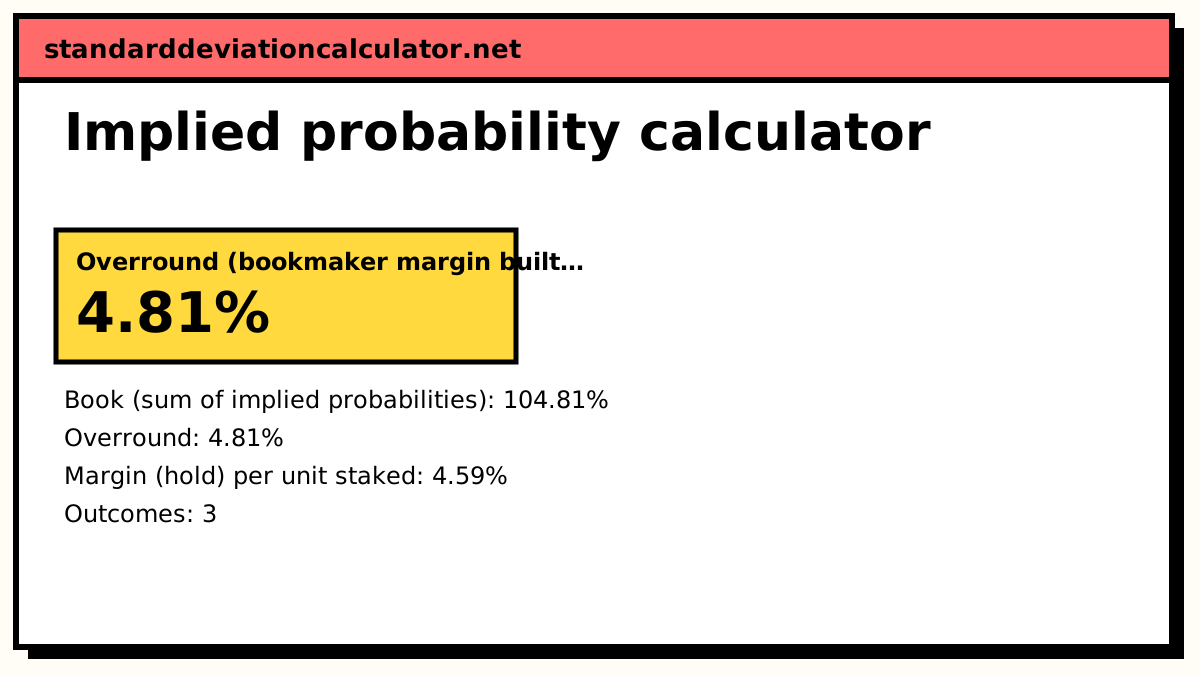
book = 0.47619 + 0.29412 + 0.27778 = 1.04809 overround = 1.04809 − 1 = 4.81%
Remove the margin by scaling each implied probability so they add to 1 (the proportional method).
Home: 0.47619 ÷ 1.04809 = 0.454343 Draw: 0.294118 ÷ 1.04809 = 0.280624 Away: 0.277778 ÷ 1.04809 = 0.265033
The bookmaker’s expected hold, if money came in to balance the book:
margin = 1 − 1 ÷ 1.04809 = 4.59%
The proportional method spreads the margin evenly. Bookmakers often load more of it onto long shots (the favourite–longshot bias), so the true chance of an outsider can be lower still.
The formulas
Decimal d: implied = 1 ÷ d Fractional a/b: implied = b ÷ (a + b) American +A: implied = 100 ÷ (A + 100) American −A: implied = A ÷ (A + 100)
Book = Σ implied, overround = book − 1 No-vig probability = implied ÷ book
A worked example
A bookmaker prices a football match at 2.10 for a home win, 3.40 for a draw and 3.60 for an away win. First convert each price:
Home 1 ÷ 2.10 = 0.476190 Draw 1 ÷ 3.40 = 0.294118 Away 1 ÷ 3.60 = 0.277778
These add to 1.048086, so the book is 104.81% and the overround is 4.81%. Exactly one of the three outcomes will happen, so the true probabilities must add to 100%. The extra 4.81 points are the bookmaker's edge. As a share of the money staked, the margin is 1 − 1 ÷ 1.048086 = 4.59%.
Dividing each implied probability by 1.048086 removes the margin:
| Outcome | Odds | Implied | No-vig | Fair odds |
|---|---|---|---|---|
| Home | 2.10 | 47.62% | 45.43% | 2.201 |
| Draw | 3.40 | 29.41% | 28.06% | 3.563 |
| Away | 3.60 | 27.78% | 26.50% | 3.773 |
So the market's own best estimate of a home win is about 45.4%, not the 47.6% the price suggests. The fair decimal odds, 1 ÷ 0.4543 = 2.201, are what the bookmaker would offer with no margin at all.
How to use the result
A bet has positive expected value only when your own estimate of the probability beats the implied probability of the price you take. If you think the home side wins 50% of the time, 2.10 is a good price, because it needs only 47.62% to break even. Comparing your estimate with the no-vig probability tells you whether you disagree with the market, while comparing it with the implied probability tells you whether the bet pays after the margin.
Overrounds vary a lot. Major football and tennis markets are often 2–5%; props, futures and markets with many runners can exceed 20%. If the book comes out below 100%, you have either missed an outcome or mixed prices from different bookmakers.
American odds example
Switch the format to American and a two-way market priced at −110 on both sides gives each side an implied probability of 110 ÷ 210 = 52.38%. The book is 104.76%, an overround of 4.76%, and removing it leaves the fair 50% for each side. This standard −110/−110 line is why a sports bettor must win 52.38% of such bets just to break even.
Common mistakes
- Leaving out an outcome. Forgetting the draw in a football match makes the book look far below 100%.
- Treating implied probability as the true chance. It includes the bookmaker's margin.
- Mixing formats. Choose the format that matches every price in the table.
- Reading fractional odds as “for”. 5/2 is odds against: a 2 ÷ 7 = 28.6% implied chance.
Common questions
What is implied probability?
The probability that a betting price corresponds to: the chance of winning at which the bet would break even. For decimal odds it is 1 ÷ odds, so 2.10 implies 47.62%. It is the bookmaker's price turned into a percentage, not the true chance of the outcome.
What is the overround or vig?
Add the implied probabilities of every outcome in a market. A fair book would total exactly 100%; bookmakers' books total more, and the excess is the overround. In the default football match the book is 104.81%, an overround of 4.81%. “Vig”, “juice” and “margin” are other names for the bookmaker's built-in edge.
What is the difference between overround and margin?
Overround is book − 1 (4.81% here). Margin, or hold, is 1 − 1 ÷ book (4.59% here): the share of all money staked the bookmaker keeps if bets come in proportion to the prices. Both measure the same edge on different bases, so quote which one you mean.
How are the no-vig probabilities calculated?
By the proportional method: divide each implied probability by the book total, so they add to 100%. Home's 47.62% becomes 47.62 ÷ 1.0481 = 45.43%. Other methods (the power method, Shin's method) put more of the margin on long shots and give slightly different answers.
Why must I enter every outcome?
The overround is only visible across a complete market. With one price the calculator can give its implied probability but cannot tell how much of it is margin. A football match has three outcomes (home, draw, away); a tennis match has two.
Related calculators
-
Odds calculator
Convert one price between odds formats and probability.
-
Expected value
The long-run value of a bet at a given price.
-
Probability calculator
Combine the probabilities of two events.